
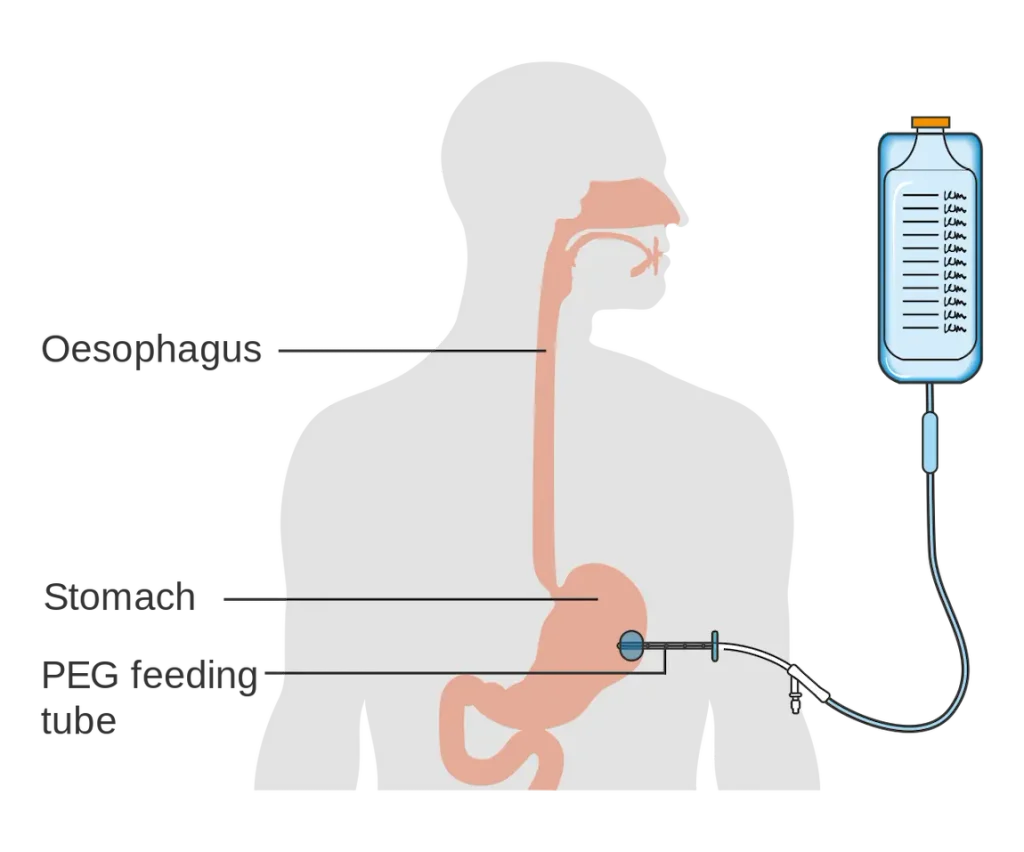
PEG tube and tracheostomy care at home can be managed by families when the care is not complicated. When a loved one first comes home, though, most families go through a difficult period while they learn the treatments and interventions the patient now depends on.
The two most common invasive interventions families face are PEG tube feeding and tracheostomy management. PEG tube feeding delivers nutritional feeds through an artificial opening into the stomach. It is needed when a patient can no longer swallow safely, usually because of a neurological condition. A tracheostomy is an artificial airway placed into the trachea. It makes breathing easier and helps clear secretions, and it is often needed because of the same neurological conditions that affect swallowing.
In elderly patients with chronic illness, a PEG tube and a tracheostomy often go together. Both are stomas, which means an artificial opening in the body, and each needs careful daily attention to stay clean, secure, and free from infection.
Can a Family Member Learn PEG and Tracheostomy Care?
Yes. A family member or an appointed carer who is willing to learn can reach a reasonable level of competency in uncomplicated PEG tube and tracheostomy care. Getting there takes proper training, time, and repeated practice under the guidance of a qualified nurse. Confidence comes from doing the task many times, not from watching it once.
Why Hospital Discharge Training Isn’t Enough
Families often receive some training in hospital before discharge. It rarely gives them enough time or enough repetition to become confident. Families are also coping with anxiety and stress during discharge, so it is hard for them to take in new clinical skills.
We often hear carers say: “I want to practise this at home, not in the hospital,” and “We don’t have all this equipment at home. What do I do if I don’t have these supplies?”
In some cases, families are sent home within 48 hours of a PEG insertion and told to arrange a home nursing in Dubai to manage the care. Many families cannot afford weeks of home nursing.
Training Your Home Helper for PEG and Tracheostomy Care
In the UAE, the people who need hands-on training are often not the family members themselves. More often it is the trusted home helper who has been with the family for years. Home helpers, carers, domestic staff, private duty nurses, and even drivers are all part of the extended family here, and they are often the ones providing daily care.
Good carer training covers more than cleaning and caring for the stoma. Carers also need to understand:
- Correct patient positioning during feeds and airway care
- Feed flow rates
- How to recognise and clear blockages
- What to do when equipment fails
- How to respond if a PEG or tracheostomy tube is accidentally pulled out
- How to manage the common day-to-day challenges
In-Home Carer Training with Simulation Models
Patient safety starts with a safe place to learn. A home nursing team can deliver family and carer training for PEG and tracheostomy care in your own home, using your own setup and supplies.
Enayati Home Healthcare has invested significantly in patient simulation training models that we bring into patients’ homes. Carers can practise hands-on in the place where they will actually give care, before they have to do it for real.
Leaders in Home Nursing
Enayati Home Healthcare is committed to developing its staff and to the ongoing skills training needed to keep pace with best practice. Our home nursing team is dedicated to delivering safe patient care. By adopting Canadian Best Practice Guidelines, Enayati nurses are ranked among the top nursing teams in the country.

3 thoughts on “PEG Tube and Tracheostomy Care at Home: Can Families Cope? A Guide for Carers in Dubai”